
SUCCESS STORY: EMPOWERING TRIBAL WOMEN FARMERS – TAPASWINI KISAN’S TOMATO SUCCESS UNDER RKVY 2024-25.
Introduction
In remote tribal regions of Odisha, agriculture remains the primary source of income, especially for women who are heavily involved in domestic farming. RKVY and other government initiatives are being implemented by OTELP Plus and ITDA Kuchinda to give small and marginal tribal farmers strategic interventions that are creating new opportunities.
One such inspirational story is that of Tapaswini Kisan, a tribal woman from the Sambalpur district. She proved that 0.5 acres of land may yield significant income.
Farmer’s Background
Tapaswini Kisan, 32, and her spouse, Dinabandhu Kisan, reside in Jaldihi village, which is under K. Jamankira GP, Kuchinda block, Sambalpur district.
Due to her lack of resources and land, she had to rely on conventional farming methods to survive. Her 0.5-acre cultivable area was a size that is frequently disregarded in commercial farming. Her cultivable area was just 0.5 acre, a size often overlooked for commercial farming. However, her willingness to learn and adapt opened the door to success.
Problem Statement (Before the Intervention)
Prior to assistance, Tapaswini engaged in low-input farming, which produced very little profit. It was challenging to create a lucrative crop due to a lack of access to high-quality seeds, organic fertilisers, pest control, and contemporary production techniques. The potential of her land was still unrealised, and her family's income was not enough to meet their basic necessities.
Details of the Intervention
Tapaswini was chosen to receive support under the RKVY scheme, which was carried out by OTELP Plus and ITDA Kuchinda. Providing high-quality tomato seedlings appropriate for the region; applying neem oil for environmentally friendly insect control; using farm yard manure (FYM) to increase soil fertility; and using phosphate solubilising bacteria (PSB) to enhance nutrient absorption were all part of the intervention.
In order to embrace better farming practices, field workers also gave her basic training on planting, pest control, and land preparation.
Impact
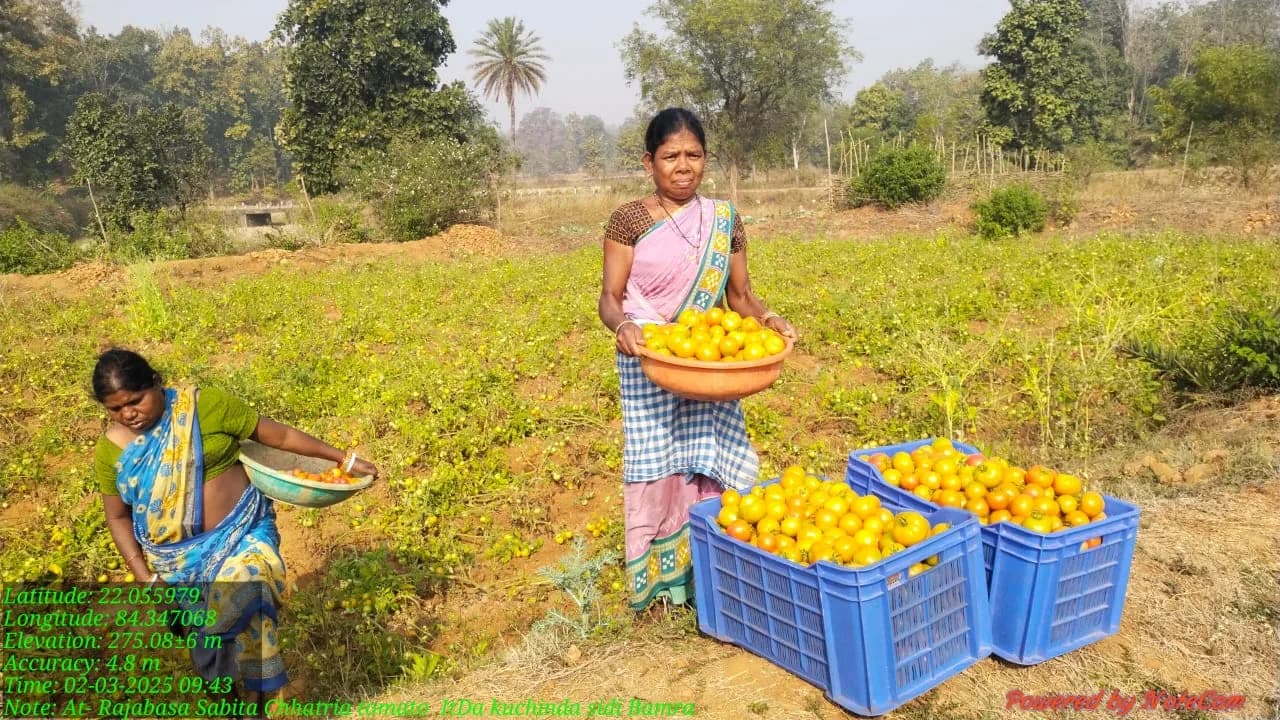
With dedicated effort and proper guidance, Tapaswini cultivated tomatoes on her small patch of land. She harvested 0.5 tonnes of tomatoes, which she sold in the local market @ Rs. 20/Kg, earning a respectable income of ₹10,000. For a landholding as small as 0.5 acre, this was a remarkable achievement. The earnings provided her family with financial relief and encouraged her to expand cultivation in the next season.
Conclusion
Tapaswini's story demonstrates that opportunity is the first step towards empowerment and that, with the correct assistance, even the smallest plot of land can produce a sizable income. Her accomplishments under the RKVY program through ITDA Kuchinda and OTELP Plus show how targeted interventions can have a profoundly positive effect on tribal women farmers. Today, Tapaswini is a source of inspiration in her village, inspiring people to embrace better farming methods and have faith in agriculture's potential.
Support work like this
Stories like this are possible because partners invest in programs designed to last.